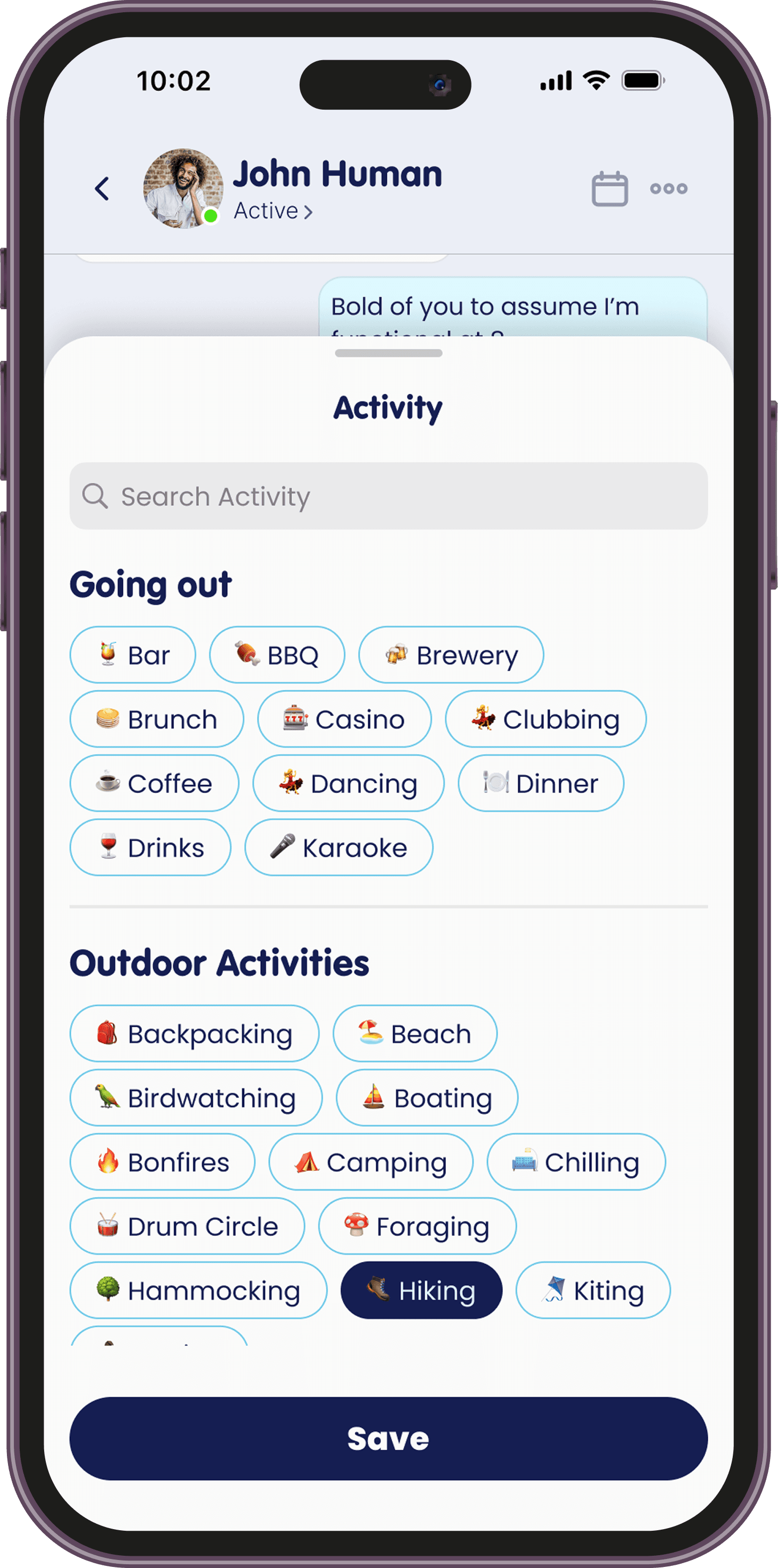
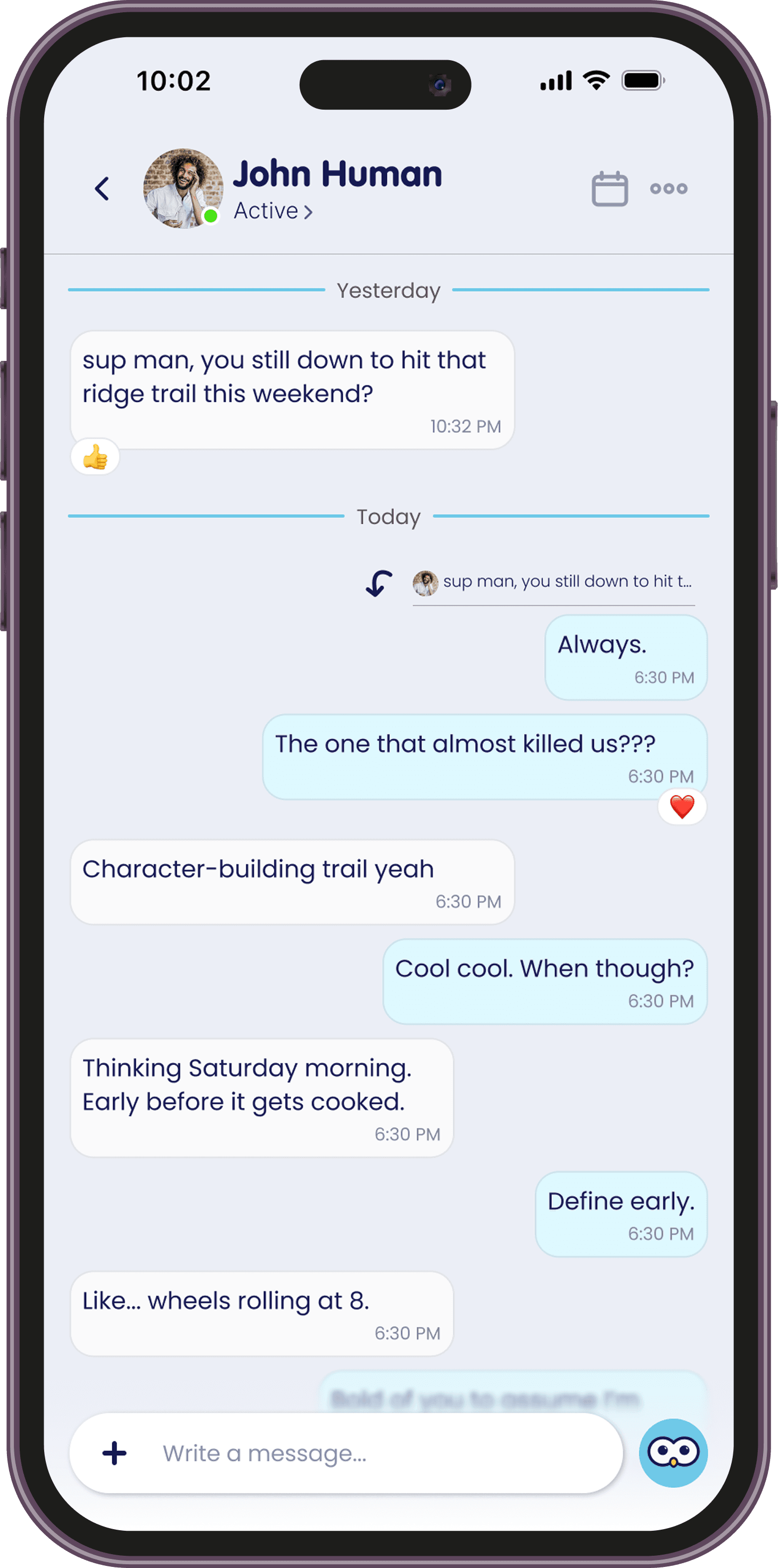
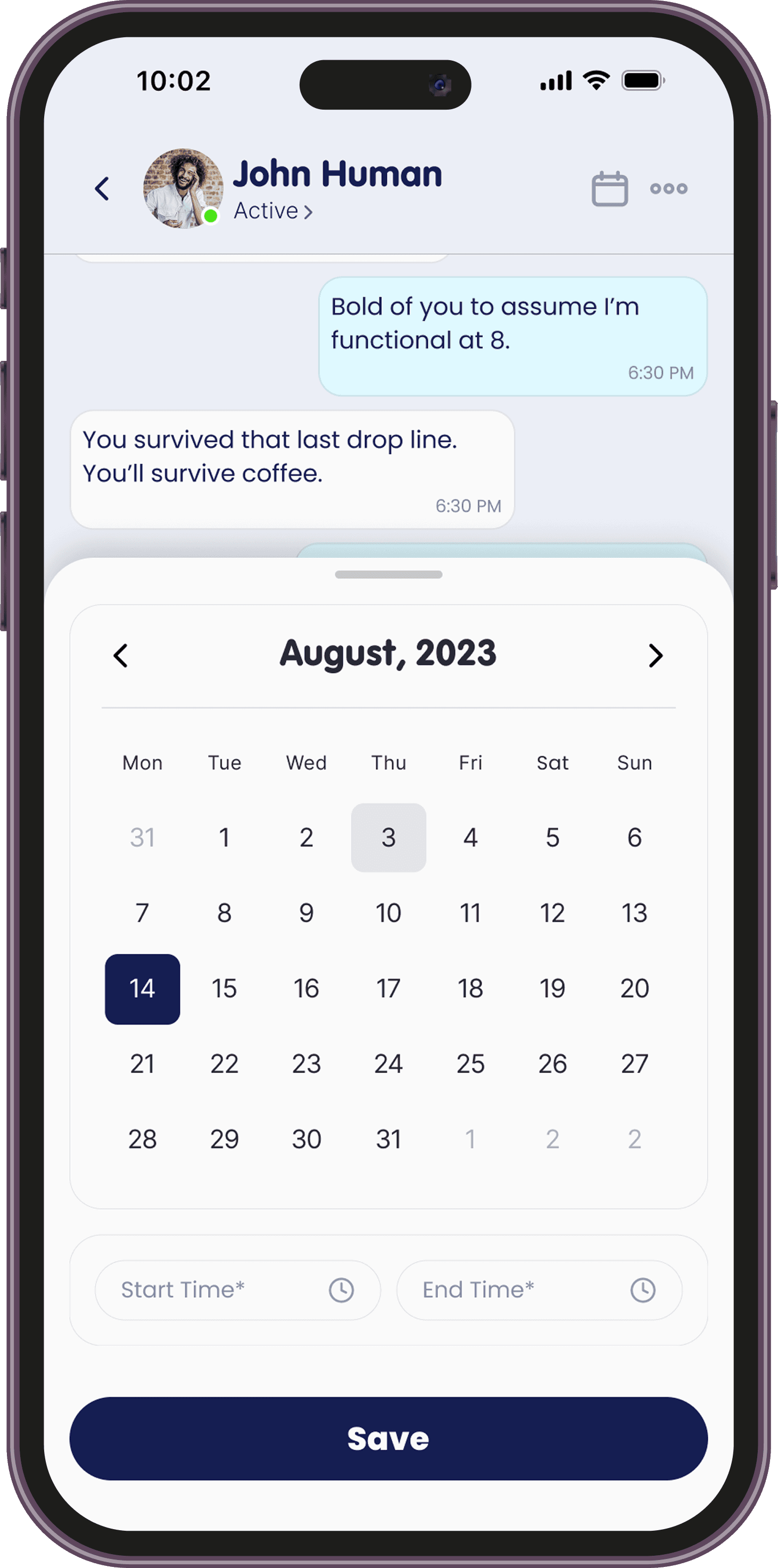
Designing an AI planner that kept users in the conversation and turned ideas into owtings.
AI Assistant
iOS
Chat UX
Owting connects people through shared activities. But the moment someone wanted to act on an idea — grab dinner, hit a show, try that new place — they had to leave the conversation, browse separately, and come back to coordinate.
Spontaneous plans died in the gap between intent and action. By the time someone returned with a suggestion, the group had moved on.
Increase in event planning initiated from chat.
40%
Reduction in app switching during event planning.
7+
Steps across 3 screens to plan a single outing.
Team
Product Designer (self), 1 PM, 1 Engineer
My Role
Product Strategy & End-to-end UX Design
Timeline
3 weeks
Four distinct friction points kept showing up in research. Each one alone was manageable.
Together, they killed spontaneity.
01
Discovery Friction
The tools to plan were nowhere near the conversation. The idea formed in chat. The ability to act on it was three screens away.
02
Context Loss
Leaving chat meant losing the thread. Every time a user navigated away, they broke the group's momentum. Coming back felt like starting over.
03
Planning Overhead
One plan, multiple screens, too many decisions. Coordinating required juggling different sections of the app for what should have been a single flow.
04
Cold Start
Without a prompt, users stared at a blank screen. No starting point meant no initiative. The blank slate killed more plans than bad suggestions ever would.
Chat was where the intent lived. Everything else was somewhere else.
Through usability sessions and product analysis, I mapped the full journey from "we should hang out" to an actual plan. The gap between those moments was where users dropped off.
KEY INSIGHT
Three patterns emerged: users had the intent but no infrastructure, every extra step killed spontaneity, and people wanted the conversation to continue — not a separate tool to learn.
SOLUTION 01
Entry Point
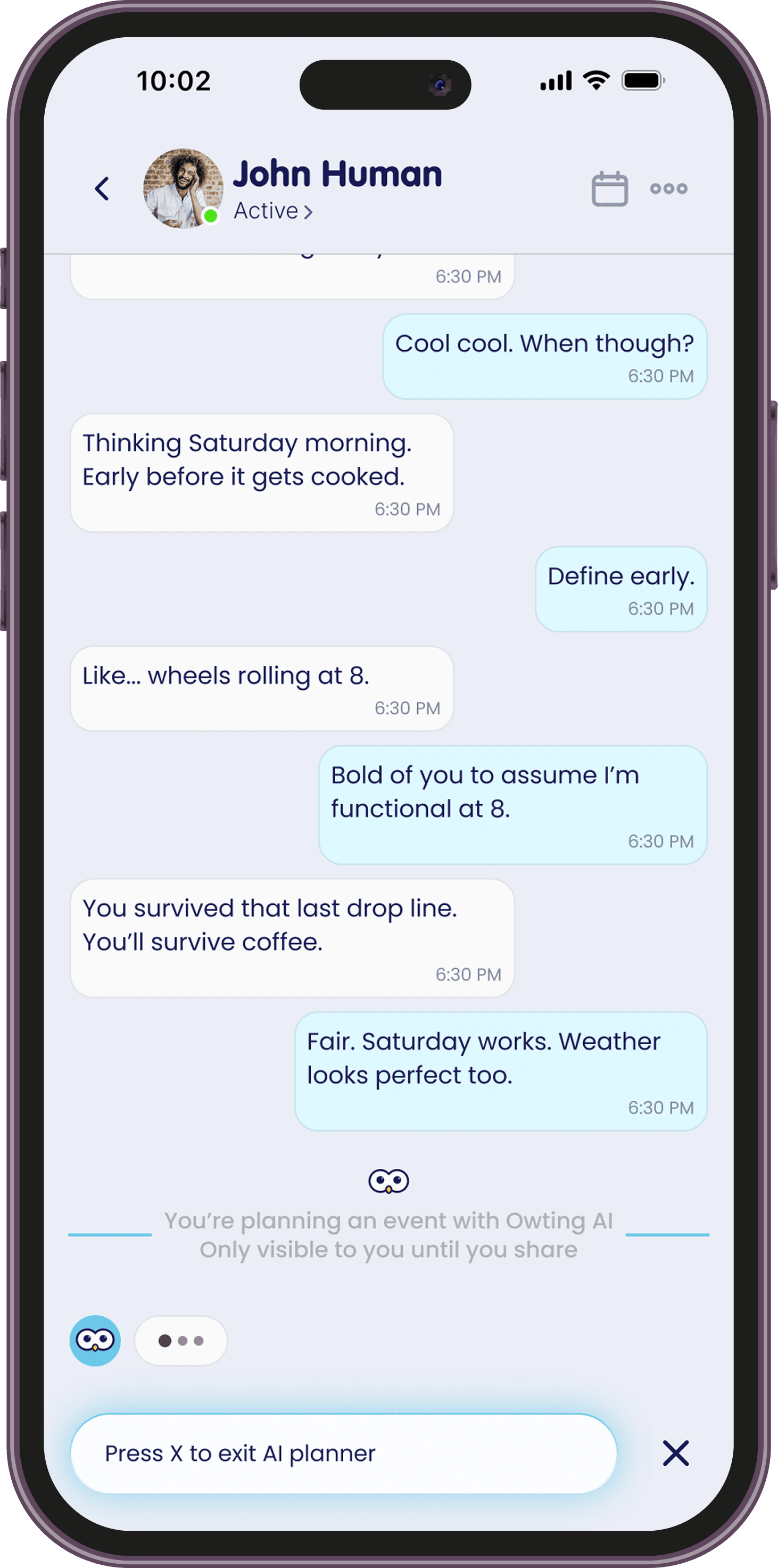
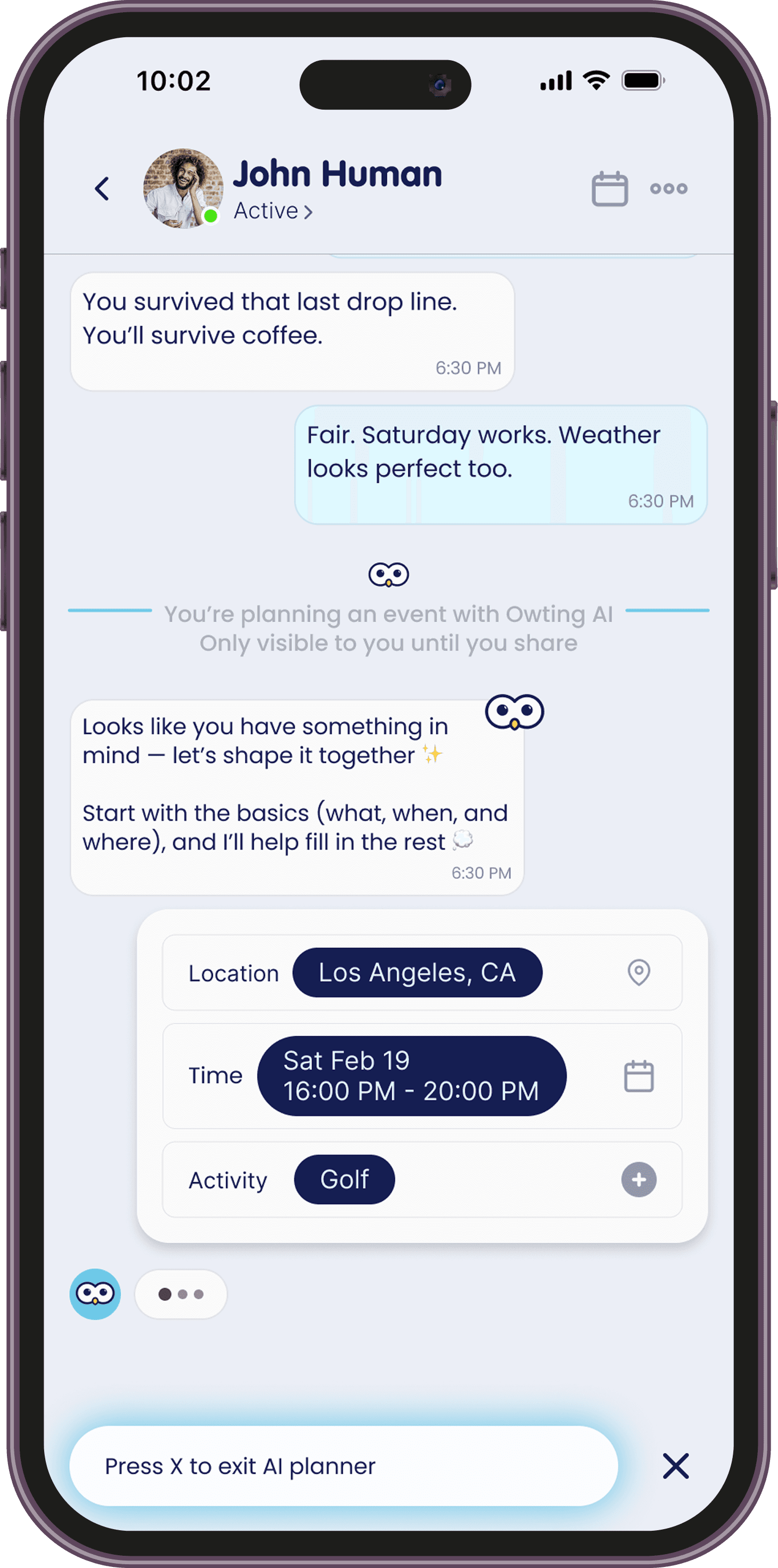
A single button embedded in the chat interface. The AI assistant triggers inline — the conversation doesn't pause, the planning just begins.
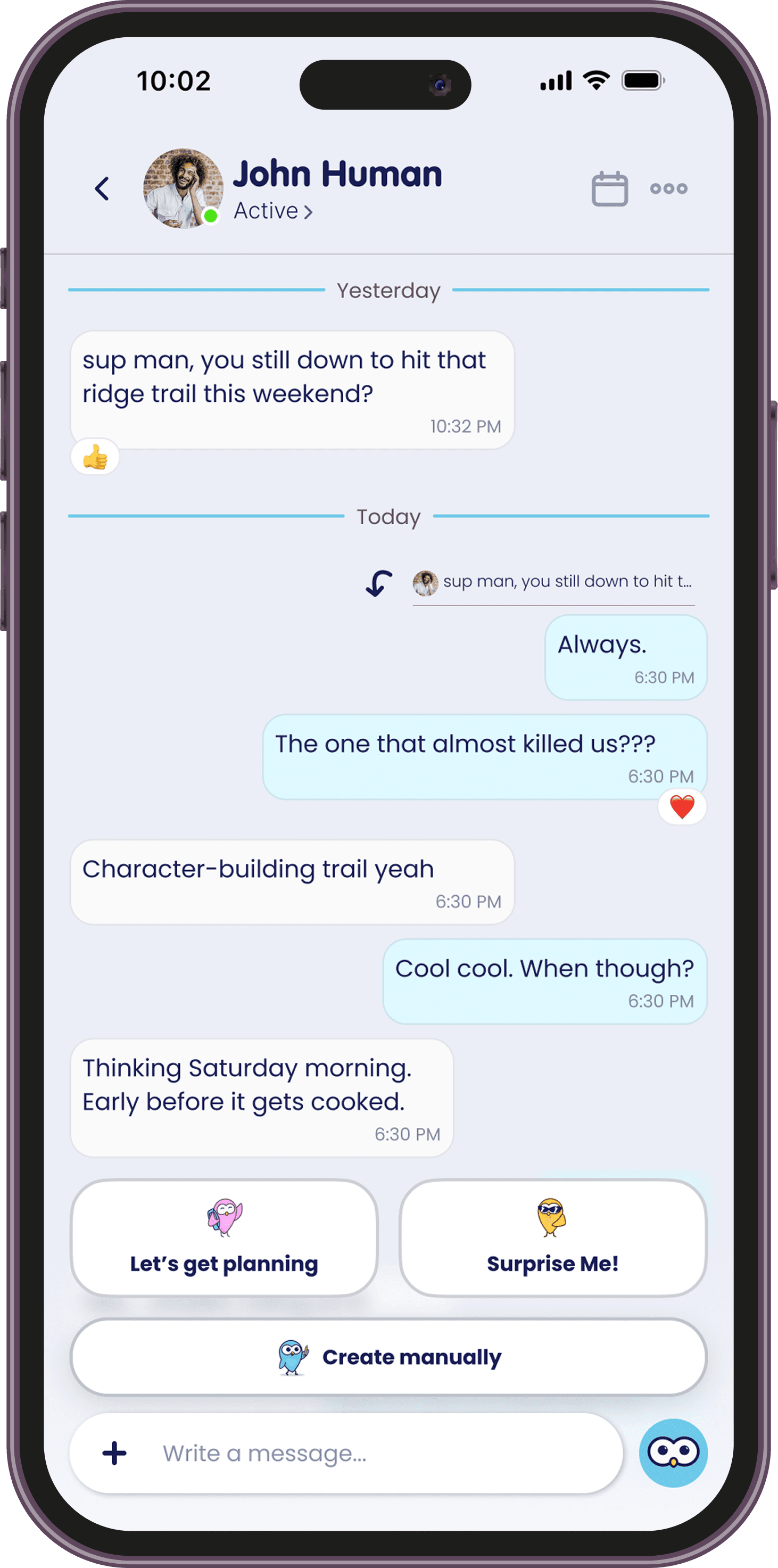
2×
faster time to first event suggestion
SOLUTION 02
AI Suggestions
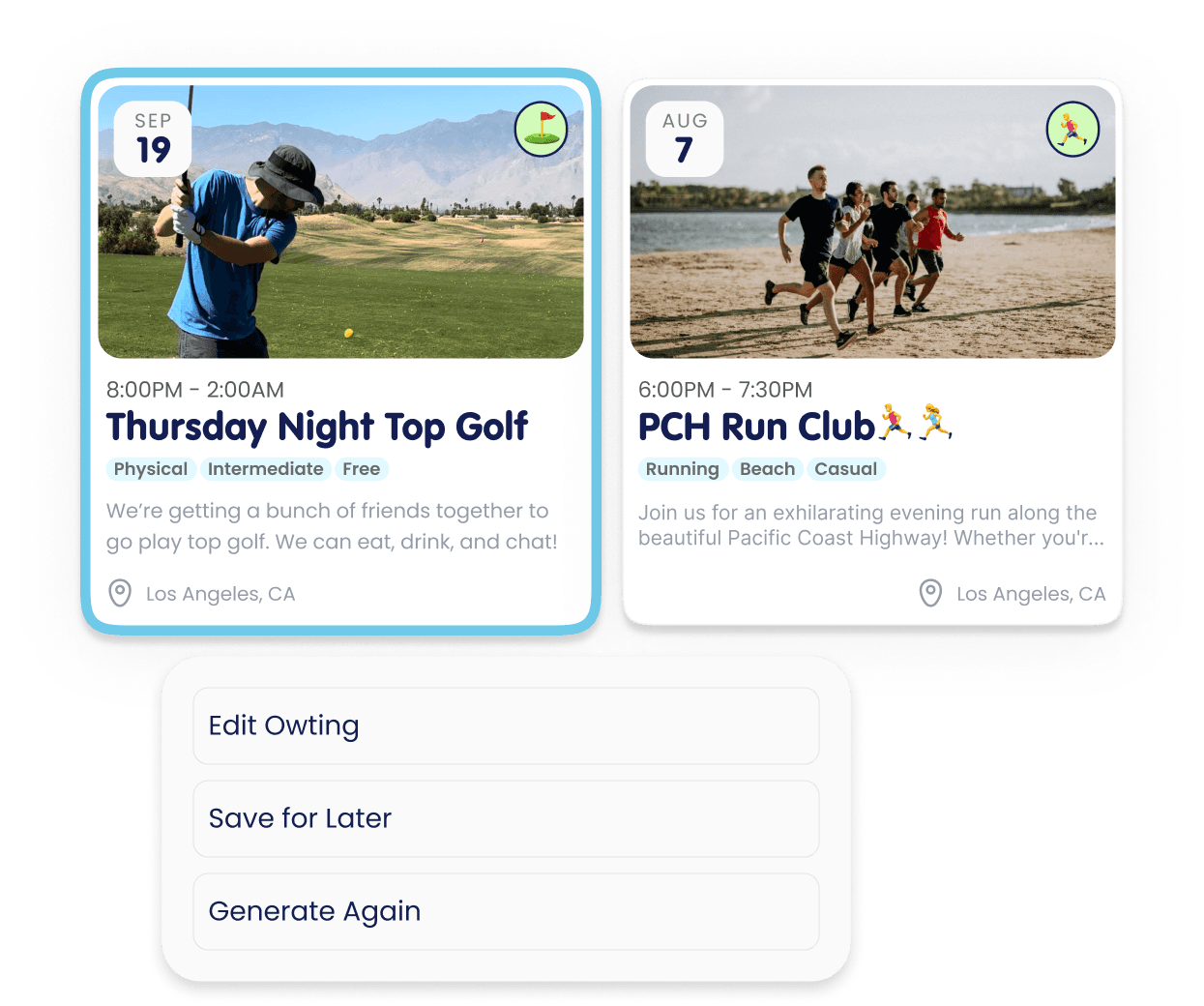
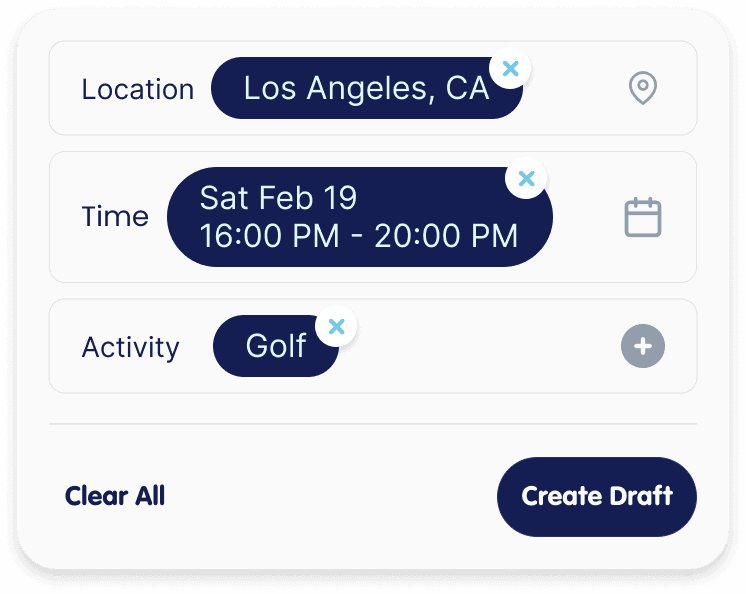
Curated options based on interests and location, presented as conversation-native cards. Personalised suggestions remove the blank slate problem.
30%
fewer steps to plan an Owting
SOLUTION 03
Seamless Handoff
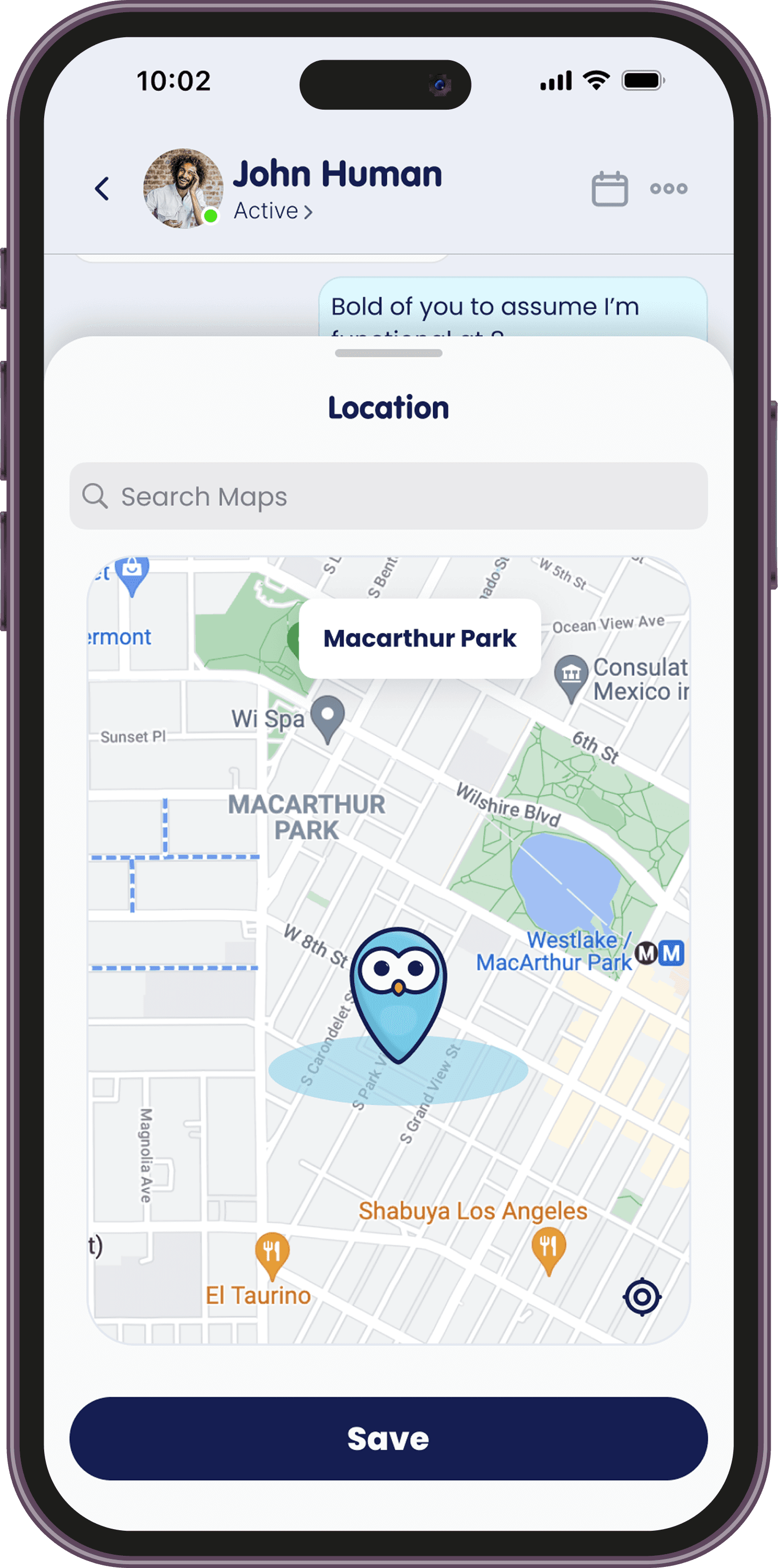
From event details to group coordination in one flow. No switching screens, no copying information. The AI does the heavy lifting — the conversation carries the plan forward naturally.
40%
reduction in app switching
Three decisions shaped the outcome more than any interface detail.
The best AI is invisible
Users didn't want a planning tool. They wanted their conversation to keep moving. Embedding the assistant inside chat meant it felt like a natural next step, not a separate feature to learn.
Cutting taps matters less than eliminating the moments where users stop and think "what do I do next?" Personalised suggestions did that more effectively than any navigation shortcut.
Spontaneity is fragile
The window between intent and action is smaller than it looks. Every extra step is a reason not to follow through. Designing for that window — not around it — is what made this work.